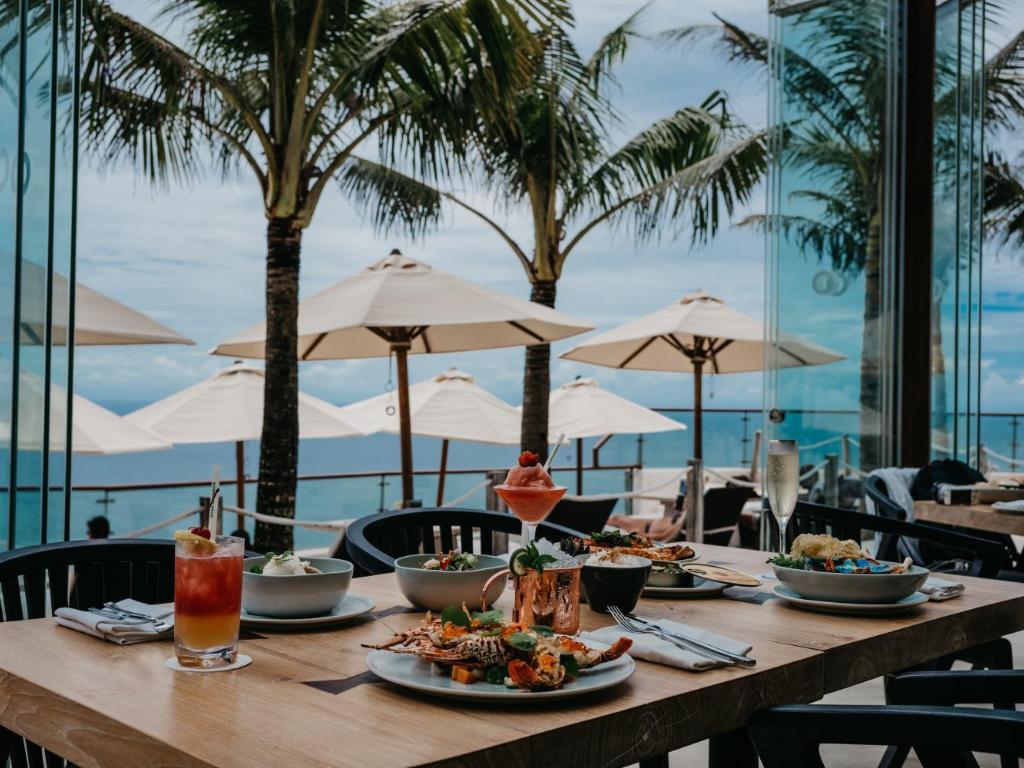
Updated monthly
Infinity pool hotels in Bali
A curated list of Bali's most photogenic infinity pools, jungle, cliffside and beachfront stays.

 Best for: jungle ravines and cliffs
 Top areas: Ubud, Uluwatu, Seminyak
 Pool styles: jungle + clifftop + beachfront
 Best time to visit: May - Oct
Bali is not one destination - it is five. Jungle valleys, clifftop ocean drops, calm resort bays, polished enclave beaches, and a social sunset coast: each rewards a different kind of traveler, and each produces a different kind of infinity pool experience.
That variety is exactly why Bali consistently ranks among the world's top destinations for infinity pool hotels. A vanishing-edge pool perched above an Ubud ravine feels nothing like a clifftop horizon pool in Uluwatu - and neither feels like a calm beachfront pool in Jimbaran or Nusa Dua. Choosing the right one starts with choosing the right area.
Below, we break down the best infinity pool hotels in Bali by cluster, scenery type, and who each property actually suits - so you can match the view to the trip you are actually planning.





 7 room options
 from $260/night*
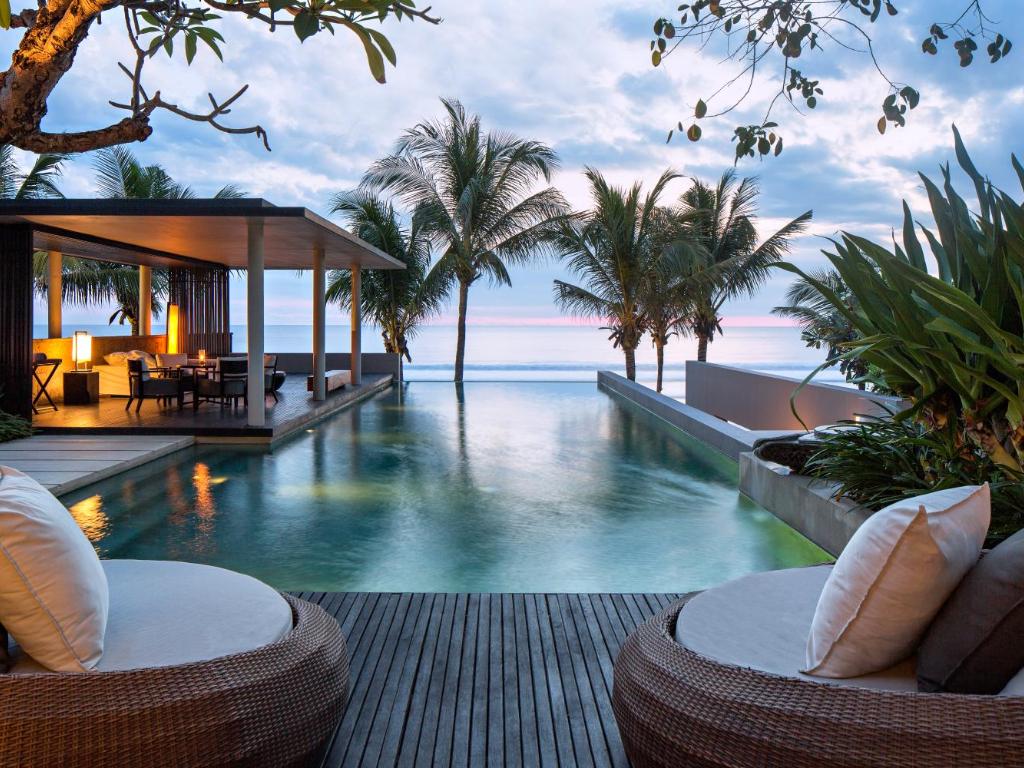
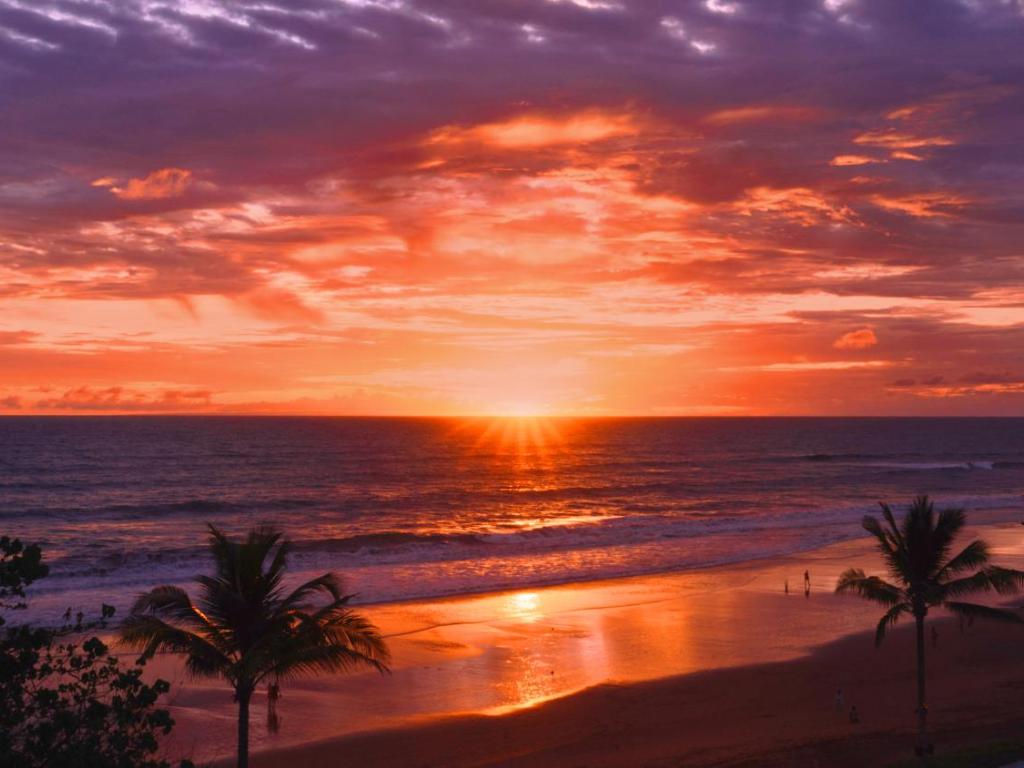
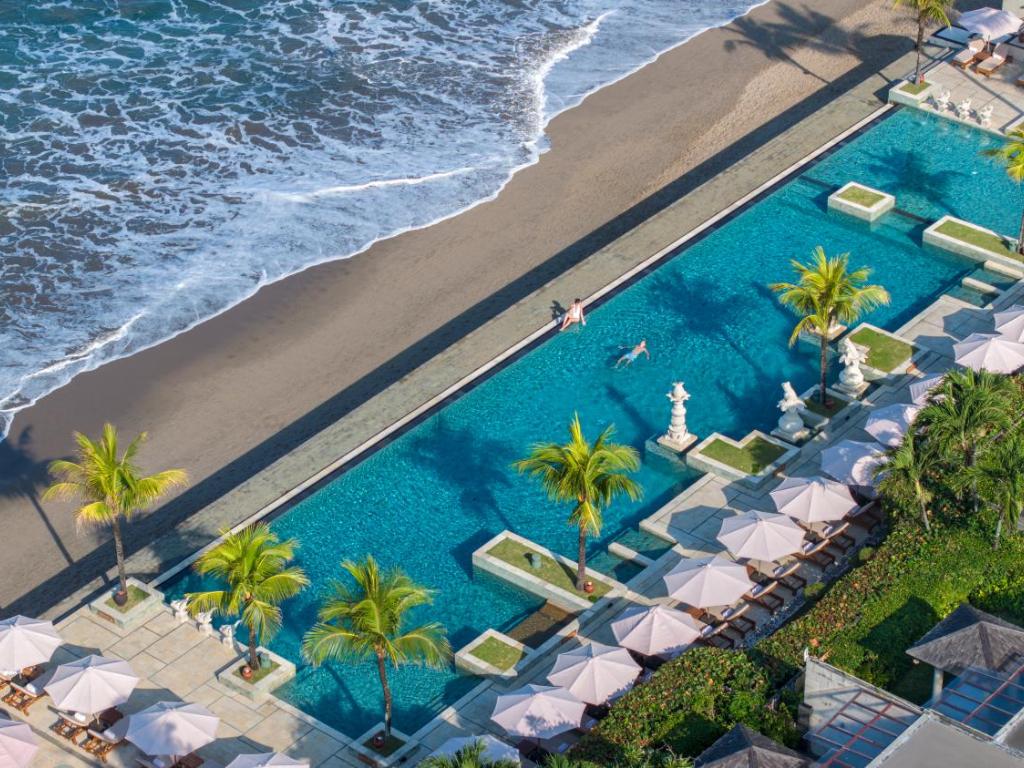
The Seminyak Beach Resort & Spa delivers an exceptional beachfront experience along one of Bali's most sought-after coastlines. This infinity pool hotel in Bali centers around a stunning ocean-facing infinity pool surrounded by lush tropical greenery, creating an idyllic setting for sunset viewing. Located adjacent to the renowned Ku De Ta and within easy reach of Petitenget Beach, the resort places guests at the heart of Seminyak's vibrant scene while maintaining a tranquil atmosphere.
Guest accommodations blend traditional Balinese design elements with contemporary comfort. Each room features a 42-inch flat-screen television with DVD player, along with spacious bathrooms equipped with both rainshower and bathtub facilities. Upgraded suites and villas provide private hot tubs positioned to capture sweeping ocean panoramas, allowing guests to unwind while taking in coastal views.
Dining experiences span multiple venues, including the all-day Santan Restaurant set amid waterways and gardens serving international cuisine. The Sanje Sunset Restaurant & Lounge offers an elevated dining atmosphere, while the poolside bar provides refreshments steps from the water. Breakfast options accommodate diverse dietary preferences with continental, vegetarian, halal, gluten-free, American, and buffet selections available.
The resort supports wellness and relaxation through its fully-equipped spa facility and fitness center. Complimentary WiFi extends throughout the property, and free private parking ensures convenience for those exploring the island. Ngurah Rai International Airport lies approximately 45 minutes away by road.
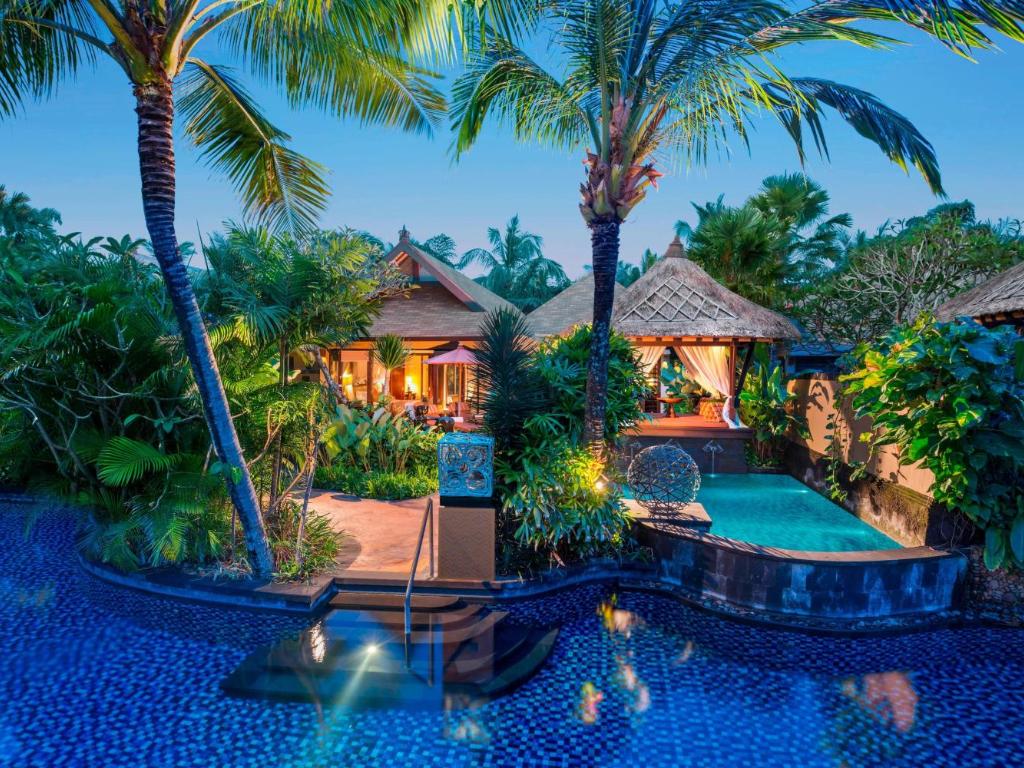
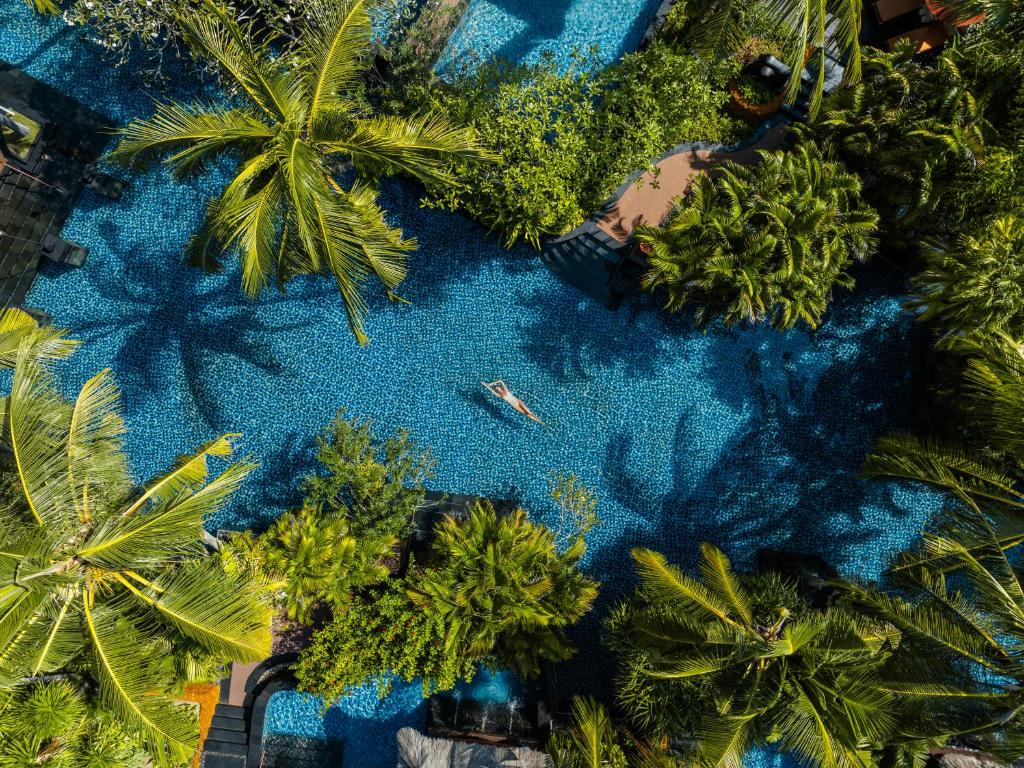
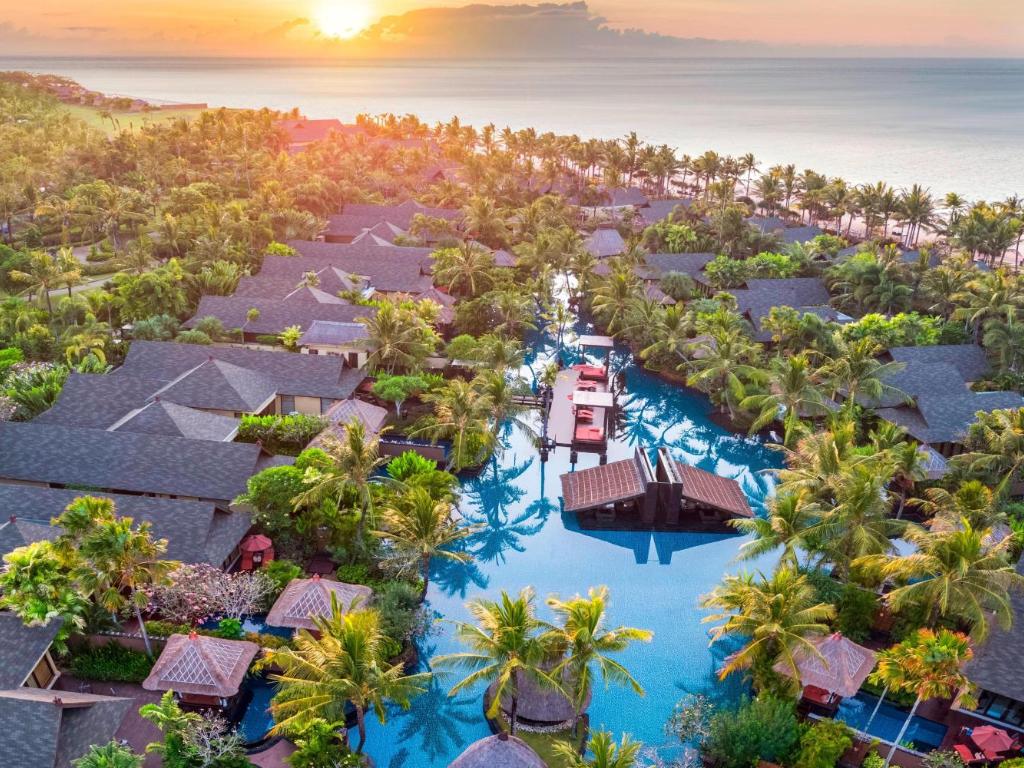
Positioned along the protected shores of Nusa Dua, this infinity pool hotel in Bali combines beachfront elegance with the signature St. Regis Butler Service. The resort sits 25 minutes from Ngurah Rai International Airport, offering direct access to calm turquoise waters and a sprawling saltwater lagoon pool that anchors the property. Accommodations range from spacious suites to multi-bedroom villas, many featuring private pools and unobstructed ocean views.
Six dining venues provide diverse culinary experiences, from the renowned breakfast buffet at Boneka to refined Pan-Asian cuisine at Kayuputi and traditional Balinese flavors at Dulang. The St. Regis Bar serves the signature Bali Mary cocktail, while Vista Bar and Gourmand Deli offer casual beachside and poolside dining options throughout the day.
The Iridium Spa anchors the wellness offerings, complemented by unique activities including glass-bottom canoe excursions and stand-up paddleboard yoga on the lagoon. Families benefit from thoughtfully designed programs such as Tiny Afternoon Tea, Cinema Under the Stars, and a dedicated Children's Learning Center. The resort's 24-hour butler service extends personalized attention to each guest, from welcome rituals to evening turndown.
Holding EarthCheck Platinum certification, the property demonstrates environmental commitment through water bottling systems, elimination of single-use plastics, and community support initiatives.
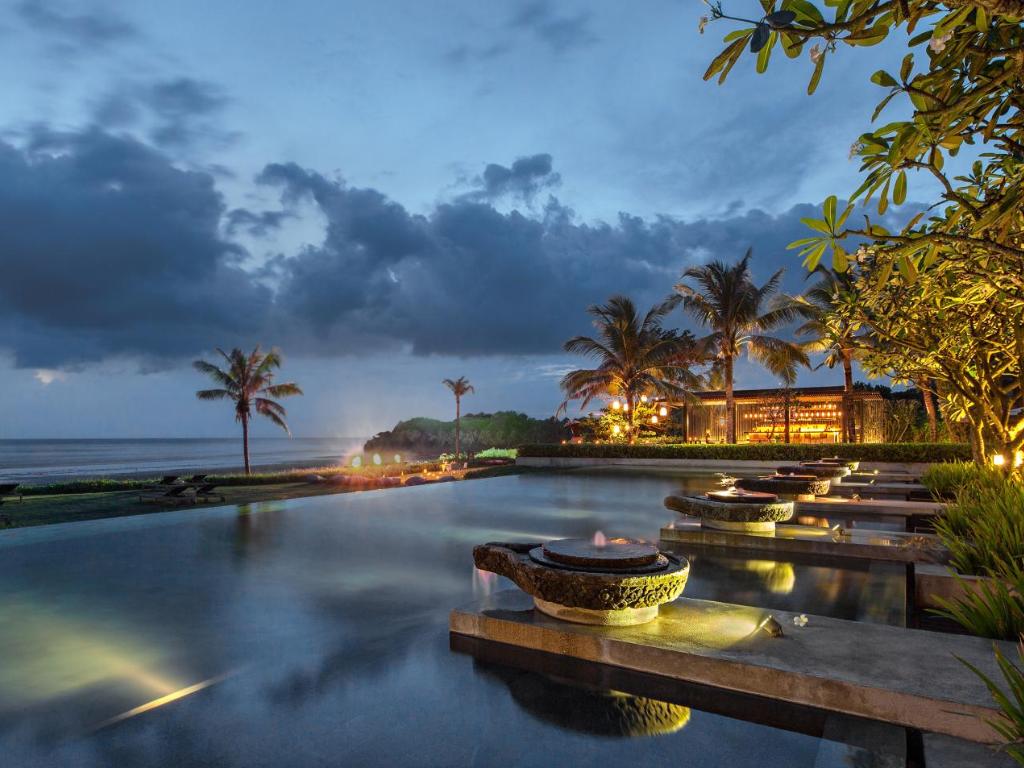
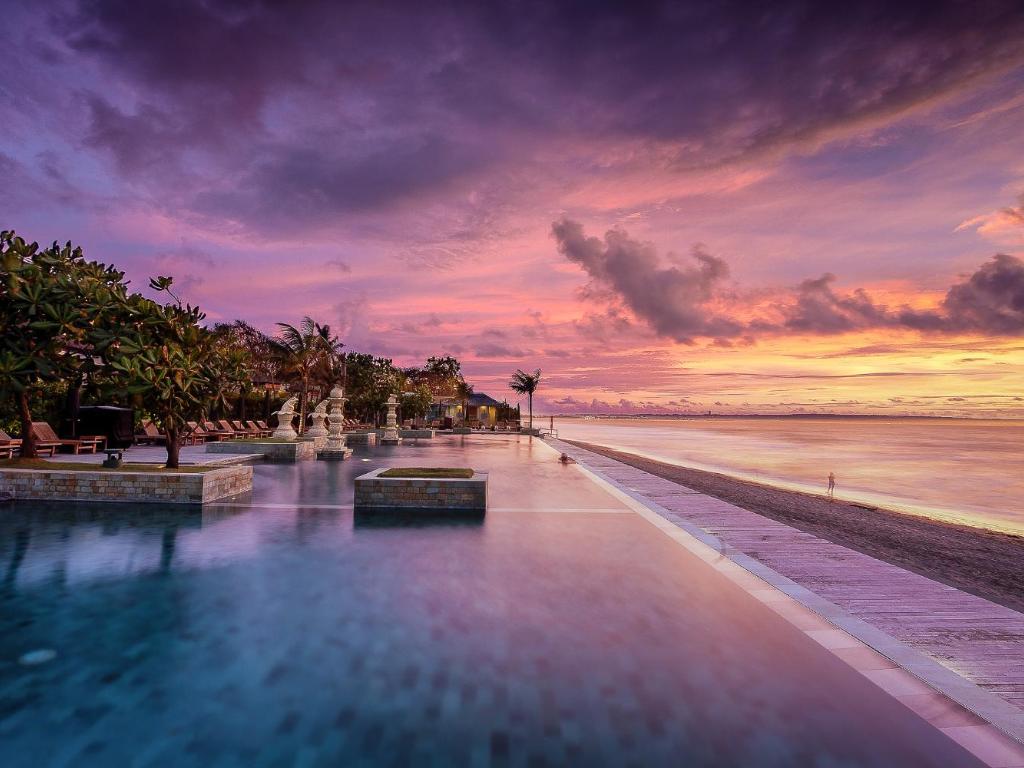
This infinity pool hotel in Bali occupies a distinctive coastal setting along Tabanan's black sand shores, positioned between the Batu Karu Mountain and traditional rice paddies. Located a 10-minute drive from the ancient Tanah Lot Temple, the property offers a quieter alternative to southern Bali's busier resort areas while maintaining proximity to cultural landmarks. Each villa features contemporary architecture with open-to-sky courtyards, outdoor pavilions, and direct beach access.
Guest accommodations include private infinity pools overlooking the Indian Ocean, with interiors that combine natural materials and modern amenities. Beach Pool Villas span 168 square meters and incorporate butler service, 49-inch LCD televisions, Bose audio systems, and custom bath products. Larger configurations extend up to 646 square meters with expanded outdoor spaces. All villas provide complimentary wireless internet and 24-hour room service.
The two-level Ombak restaurant delivers Western, Indonesian, and Japanese cuisine through both formal dining areas and casual terrace seating. The property's spa facility emphasizes locally-inspired treatments administered by Balinese therapists, complemented by an infinity-edge pool that extends toward the ocean horizon. Private beach cabanas accommodate sunbathing, while leisure concierges coordinate activities ranging from temple visits to fishing excursions.
Ngurah Rai International Airport sits approximately one hour away by road. The resort maintains EarthCheck certification and emphasizes connection to surrounding villages through cultural programming and community partnerships.
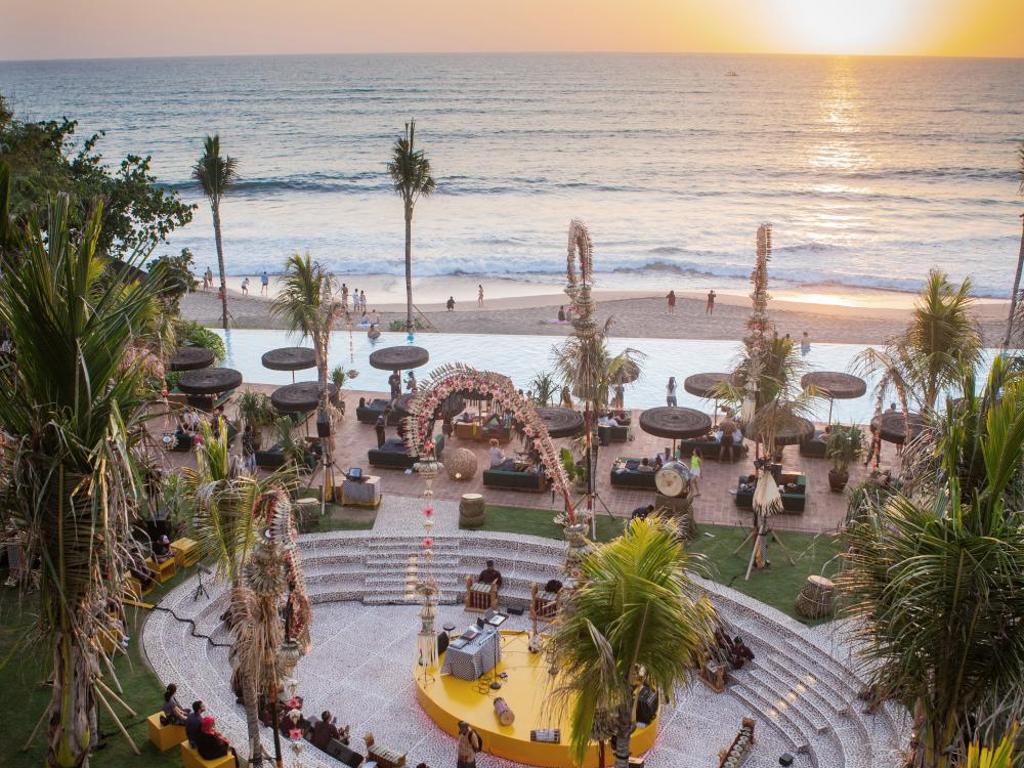
Desa Potato Head combines oceanfront leisure with a commitment to regenerative practices at its Seminyak location along Petitenget Beach. This infinity pool hotel in Bali functions as a cultural village where accommodations integrate with multiple dining venues, a beach club, and creative programming. The property holds recognition on The World's 50 Best Hotels list and maintains Certified B Corporation status, reflecting its dedication to environmental and social responsibility.
Accommodations feature air-conditioning, private bathrooms with modern fixtures, and complimentary WiFi throughout. Rooms include bathrobes, mini-bars, and contemporary amenities designed for extended stays. The beachfront infinity pool serves as a central gathering point, complemented by sun terraces, lush tropical gardens, and direct beach access with pool and beach towels provided.
Dining options span Indonesian, Italian, and international cuisines served throughout the day, with breakfast selections including continental, Asian, American, vegetarian, vegan, and gluten-free choices. The property features a pool bar, spa facilities, fitness room, and hot tub alongside organized activities such as yoga classes and evening entertainment. Outdoor seating areas and a nightclub provide additional social spaces.
Free private parking accommodates guests exploring the island, while the location positions visitors steps from Seminyak's vibrant dining and shopping district. Room configurations offer landmark, inner courtyard, or sea views depending on selection.
4 room options
from $1230/night*
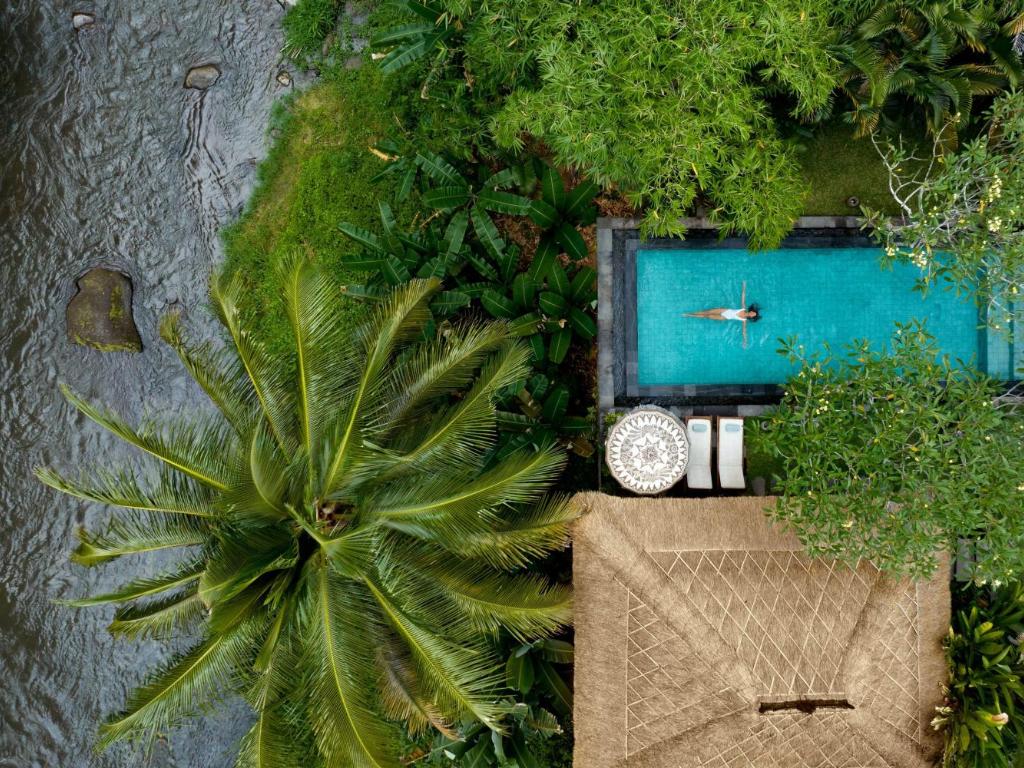
Nestled along the sacred Ayung River in Ubud's cultural heartland, this infinity pool hotel in Bali offers 35 suites and 25 private pool villas set within lush tropical jungle. Located just 10 minutes from central Ubud, the property combines traditional Balinese village architecture with contemporary design elements created by DESIGNWILKES. Each accommodation includes dedicated Patih butler service available 24 hours, ensuring personalized attention throughout every stay.
Villas and suites feature air-conditioning, spacious seating areas, flat-screen satellite televisions, and private bathrooms with separate bathing facilities. Most accommodations showcase views across surrounding rainforest, rice paddies, or the Ayung River below. Multi-bedroom villas span up to 2,000 square meters and include private infinity pools, outdoor sun decks with daybeds, and amenities such as separate dining rooms, kitchenettes, and dedicated spa treatment spaces.
Four distinct dining venues provide diverse culinary experiences, from Kubu's zero-waste Mediterranean cuisine sourcing ingredients within 100 kilometers to Sawah Terrace's Indonesian heritage dishes accompanied by traditional Balinese dance performances. Ambar Ubud Bar offers handcrafted cocktails with Japanese fusion dining and daily live jazz against cliff-top sunset views. The Pool Bar serves refreshments exclusively to resort guests alongside the main swimming pool.
The wellness center anchors the property's holistic programming with treatments, yoga sessions held in river-facing pavilions or rice field platforms, and a fully-equipped fitness facility. Additional amenities include a children's club, meeting facilities, complimentary WiFi, and free private parking. Ngurah Rai International Airport lies one hour away by car, while Tirtha Empul Temple sits 15 minutes from the resort.
Situated along Bukit Campuhan Ridge Walk in Ubud, this infinity pool hotel in Bali combines lush valley panoramas with proximity to cultural landmarks. Located 20 minutes from central Ubud and 25 miles from Ngurah Rai International Airport, the resort overlooks the Wos River and surrounding greenery. The property features an infinity swimming pool with sweeping views, spa facilities, fitness center, sun terrace, and complimentary WiFi throughout public areas.
Guest accommodations include Deluxe Rooms spanning 60 square meters and Royal Pool Suites at 85 square meters, with select suites offering private infinity pools and terraces overlooking the valley. All rooms feature air-conditioning, flat-screen televisions, bathtubs, and contemporary amenities. Breakfast options accommodate diverse dietary requirements including continental, American, vegetarian, vegan, halal, gluten-free, and Asian selections.
The on-site restaurant serves Indonesian archipelago flavors and East-meets-West fusion cuisine from 7:00am to 11:00pm daily, with menu options for brunch, dinner, high tea, and cocktails. Additional dining experiences include traditional Balinese dance performances and authentic Indian cuisine. Wellness offerings include spa treatments, yoga classes, and a fully-equipped fitness room, while activities extend to rafting excursions and cultural programs.
The resort provides 24-hour front desk service, concierge assistance, room service, express check-in and check-out, and free private parking. Cultural attractions within reach include Neka Art Museum, Blanco Museum, and Ubud Palace.
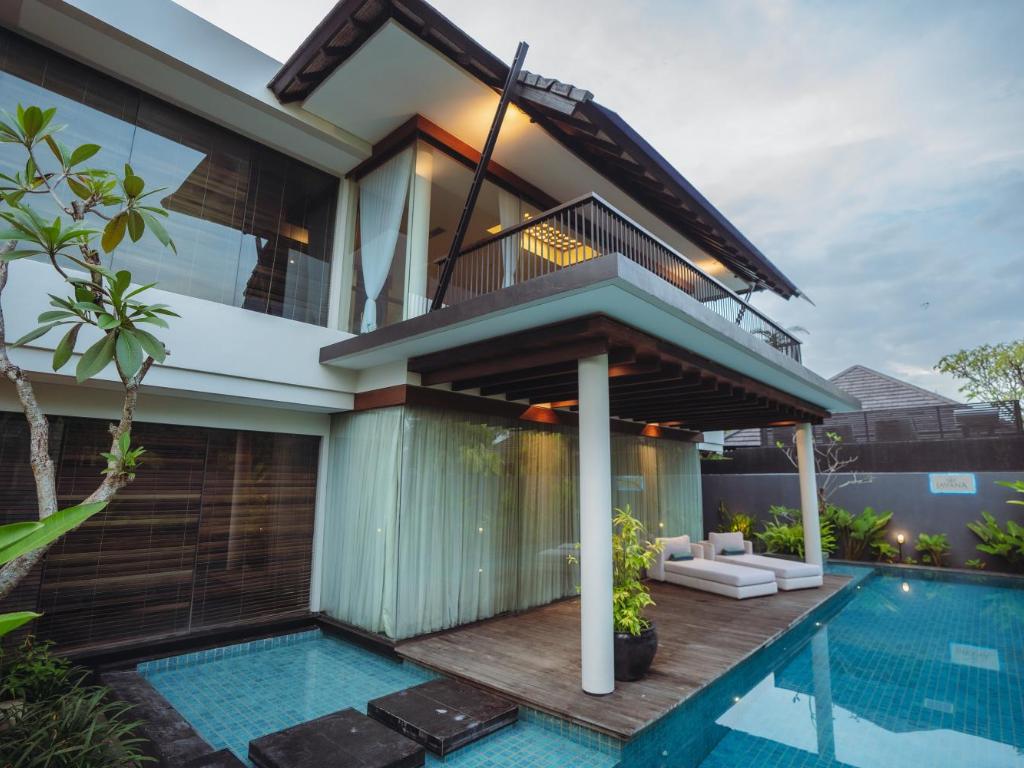
Set within a tranquil residential area of Seminyak, this infinity pool hotel in Bali comprises 16 one-bedroom private pool villas designed specifically for couples and honeymooners. Each villa features contemporary Balinese design with vaulted ceilings, teak wood poster beds, and black granite terraces overlooking individual swimming pools surrounded by lush tropical gardens. Living spaces include Smart TVs, fully air-conditioned bedrooms, and designer bathrooms with separate shower facilities.
The property sits within walking distance of Seminyak's most recognized destinations, including Potato Head Beach Club approximately six minutes away and Sarong Restaurant a nine-minute walk from the villas. Complimentary daily shuttle service connects guests to Seminyak Square and Petitenget Beach, while free WiFi and private parking provide additional convenience. Ku De Ta lies 1,739 feet from the property, with Petitenget Temple 0.7 miles away.
Joglo Restaurant serves Indonesian and international cuisine throughout the day in a traditional Central Javanese pavilion setting, complemented by in-villa dining service. The on-site Javana Spa offers Balinese-inspired massages and body treatments, while additional wellness options include in-villa massage services and sundeck areas beside each private pool. Standard amenities extend to daily housekeeping, airport transfers, and laundry service. Ngurah Rai International Airport is located 7.5 miles from the villas.
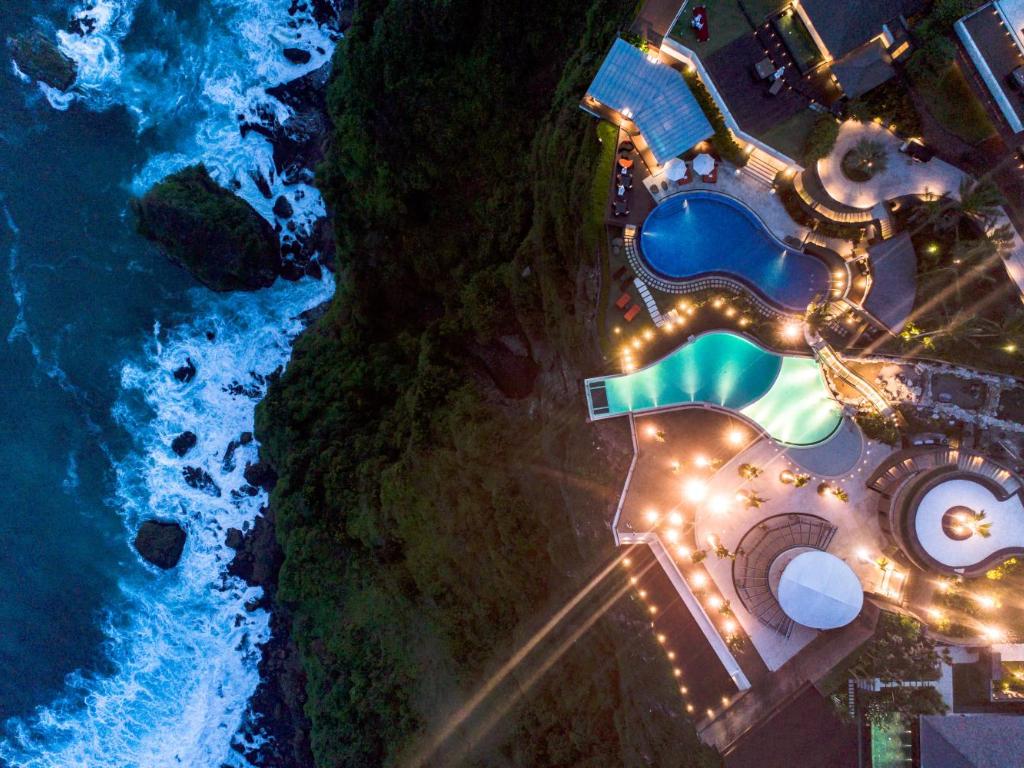
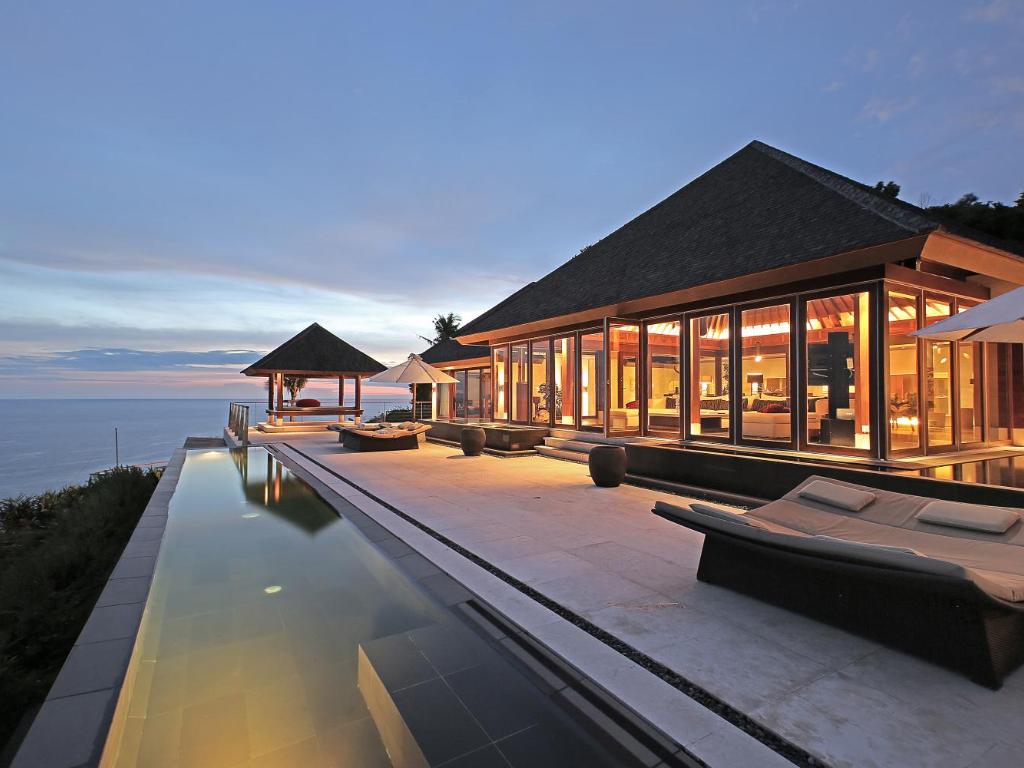
Perched on Uluwatu's dramatic cliffs 162 meters above the ocean, this infinity pool hotel in Bali comprises eight award-winning private villas offering unmatched coastal panoramas. Each villa features dedicated butler service, private pools with sea views, state-of-the-art home theater systems, fully equipped kitchens, and premium amenities including wine cellars and cigar lounges. Accommodations range from one-bedroom romantic escapes to the five-bedroom View villa spanning 1,000 square meters of interior space, with configurations suitable for couples through to groups of ten guests.
The property centers around its iconic glass-bottom sky pool positioned directly above the clifftop, creating the illusion of floating over the Indian Ocean. Additional aquatic facilities include the lagoon with cascading turquoise pools and sand-bottom swimming areas surrounded by tropical vegetation. Signature dining venues feature The Cave, a subterranean restaurant by Chef Ryan Clift carved into natural rock formations, oneeighty day club offering 180-degree coastal views, The Parlour, and The Cliff Bar reserved exclusively for villa guests.
Wellness facilities include the ocean-view spa with private treatment rooms opening to the horizon, plus The Workout fitness center equipped with LifeFitness machines and personal training options. The Club entertainment complex provides bowling lanes, private cinema and karaoke facilities, meeting spaces, and wine cellar exclusively for in-house guests, while a professional tennis court with ocean vistas welcomes both residents and outside visitors. Villa butlers prepare personalized breakfasts and arrange customized gourmet menus throughout each stay.
Best for: couples seeking cliff-edge seclusion with dramatic ocean panoramas, and travelers prioritizing private villa luxury with comprehensive onsite amenities.
In Bali, the view from the water is shaped first by landform, then by hotel design. That is why two resorts at the same price point can deliver completely different experiences. One may open onto a ravine wrapped in jungle and birdsong. Another may sit on a limestone cliff with nothing in front of it but surf and horizon. A third may be all about a long beachfront deck in Seminyak, where the pool is less about vertical drama and more about sunset, music, and the ease of rolling from lounger to dinner.
This is also why Bali works so well for travelers who care about pools as much as the room. The island gives you several visual worlds without forcing you to take another flight. Split a trip between Ubud and the Bukit Peninsula and you move from cool green depth to pure ocean exposure. Base yourself in Seminyak or Canggu and the tone changes again: flatter coast, more scene, more sunset energy, less solitude.
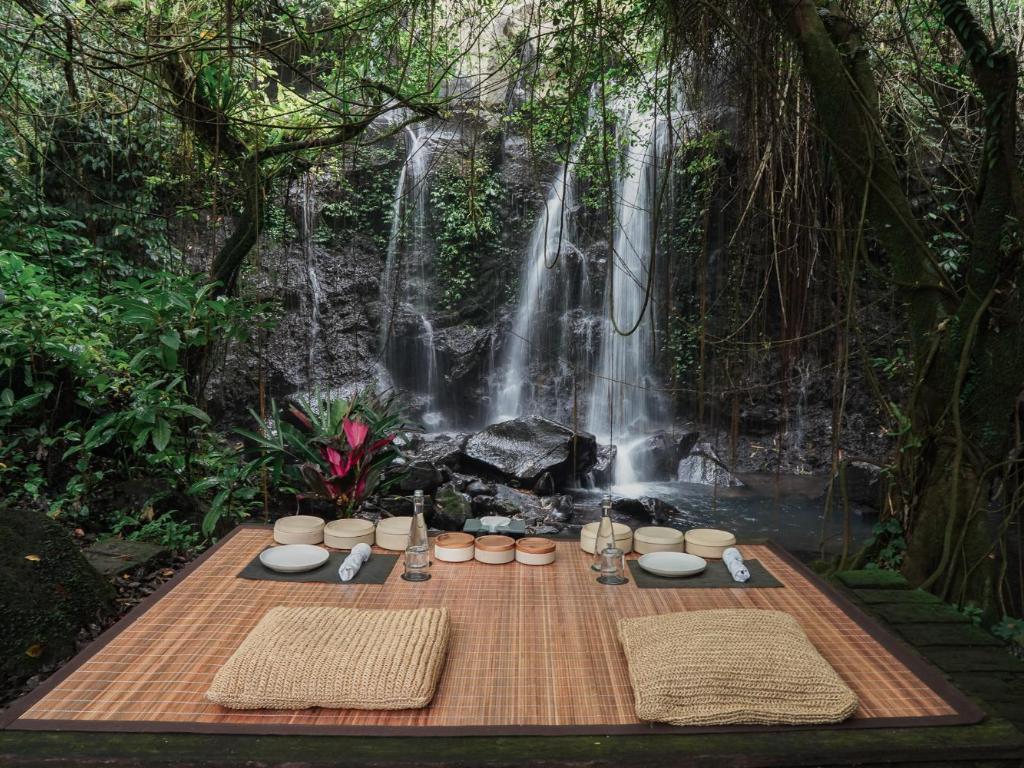
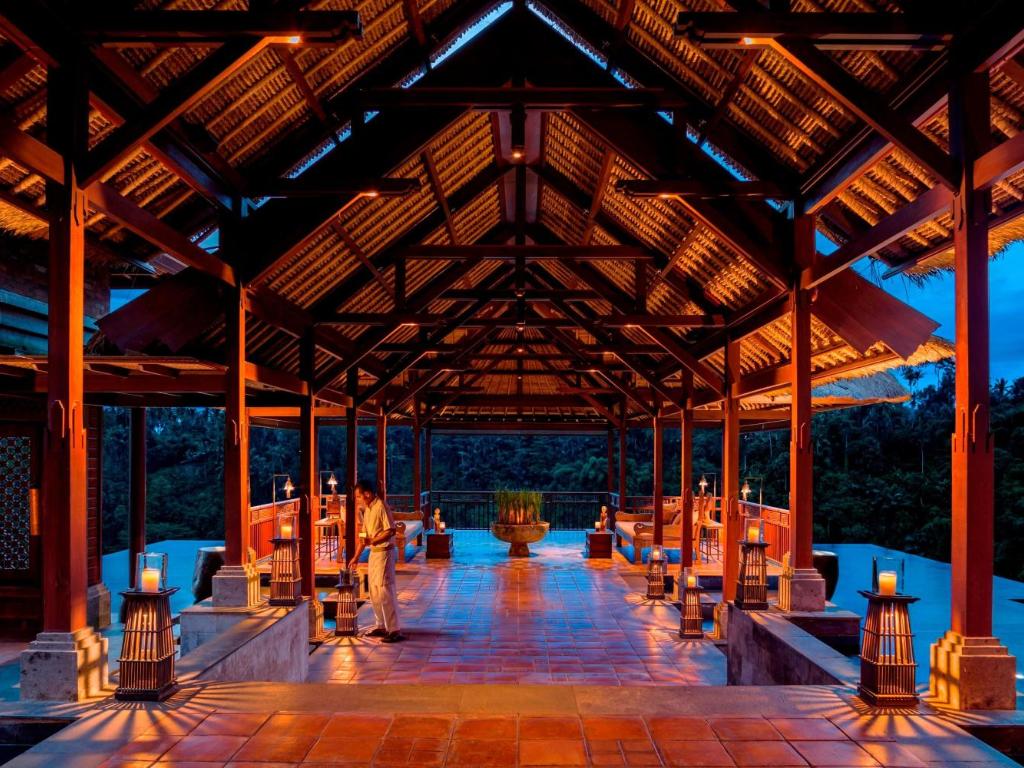
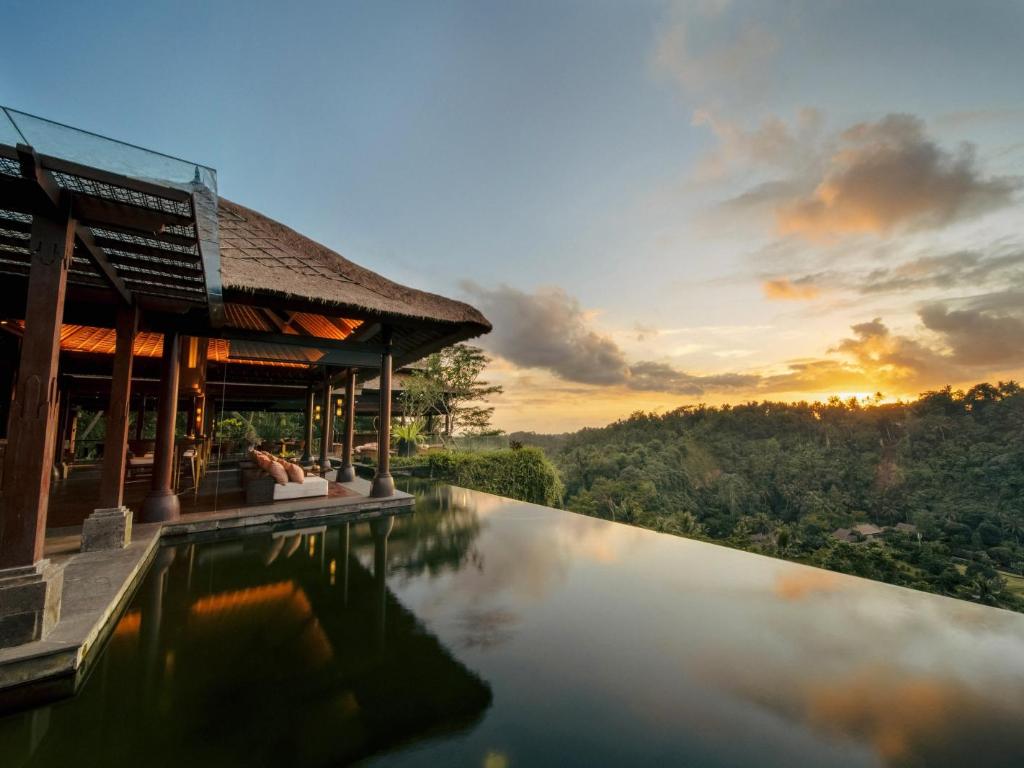
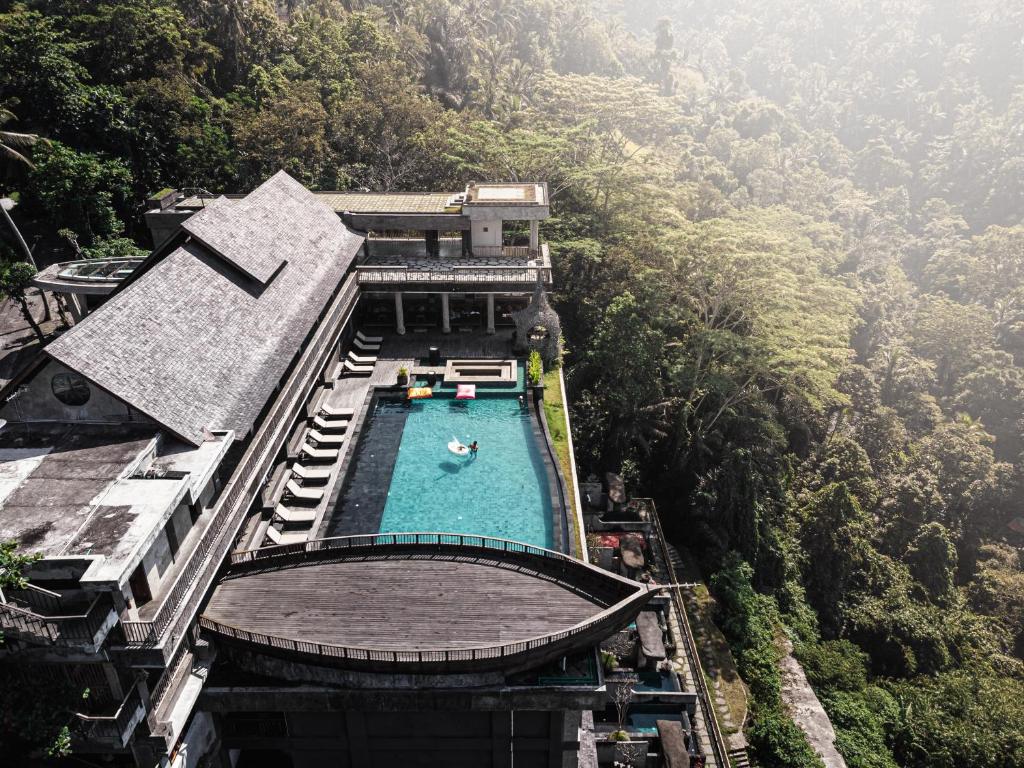
This is Bali at its most atmospheric. Resorts such as Four Seasons Resort Bali at Sayan and Mandapa, a Ritz-Carlton Reserve, lean into valley contours, layered canopy and river gorge positioning. The best pools here do not just face trees. They face depth. That distinction matters. A flat jungle view can look enclosed. A ravine view gives you that floating sensation people actually want.
The mood is quieter, more introspective and often more romantic. It suits couples, honeymooners, solo luxury travelers, and anyone who wants the pool to feel like part of a slower day built around breakfast, spa time, reading, and dinner on property.
This is where Bali does its most cinematic clifftop work. Resorts and villas on the southern edge of the island use the limestone drop to create long horizon lines and a strong sense of exposure. Bvlgari Resort Bali is the classic example of high-drama design, with its much-photographed clifftop pool vocabulary and villa pool architecture pushing toward open sea.
The payoff is obvious: sunset light, ocean scale, and a genuine edge-of-the-world feeling. The trade-off is practical. Some cliff properties are windy, some are spread out, and some of the most social venues nearby operate more like upscale day clubs than quiet hotel sanctuaries.
This is Bali's more social pool world. The landscape is flatter, so the infinity effect is often subtler unless the property is directly on the beach or attached to a strong club concept. What you get instead is atmosphere: long pool decks, easier access to restaurants and bars, and a smoother transition from day drinking to dinner reservations.
Seminyak tends to feel more polished and resort-led. Canggu leans younger, louder and more beach-club driven. If you are traveling with friends or want some energy around the pool, this zone makes sense. If your idea of the perfect pool afternoon is silence and a book, it probably does not.
These are lower-key choices, but they matter. Nusa Dua is controlled, polished and easy. Pools here are often large, comfortable and ocean-adjacent rather than dramatically suspended. Sanur works best for travelers who care about calm mornings and softer pacing. It is a sunrise coast, which makes it especially appealing for early light and a less performative mood.
If the trip is built around long pool hours, the most reliable window is the dry season, broadly May to October. This is when rainfall tends to drop, humidity is a touch easier, and the odds of getting clean views improve. For Bali, that matters more than tiny shifts in temperature. The island stays warm most of the year. What changes meaningfully is the amount of rain, cloud cover and atmospheric clarity.
This is the strongest period for pool-first travel. Days are generally drier, horizons are cleaner, and it is easier to commit to full afternoons outdoors without watching the sky for storm build-up. On cliff and beachfront decks, this often means better light quality and longer stretches of usable loungers, especially from late morning into sunset.
For jungle properties, dry season helps in a different way. The air can feel a little lighter and views deeper into the valley are less likely to disappear behind rain haze. If photography matters to you, this is the safer season.
July and August are often the driest-feeling months, but they are not automatically the only smart choice. May, June, September and early October can be excellent because you still get strong pool weather with a slightly less compressed feel.
The wet season is not a write-off, but it changes the value equation. Bali is lush and beautiful in these months, especially inland, yet pool time becomes less predictable. Downpours can arrive hard and fast. Clouds soften the horizon. Humidity rises. A clifftop hotel that looks transcendent in perfect light can feel much flatter when sea and sky merge into one grey band.
In Ubud, rain can actually enhance the atmosphere if you like mist, greenery and privacy, but it is less reliable for those clean, high-impact views that sell the pool dream. In Seminyak and Canggu, wet afternoons can also change the rhythm of beach-club and sunset-oriented properties.
For many travelers, the best answer is not peak dry season but the edges of it. May, June and September often offer a strong balance of pool weather, good light and slightly less pressure on the most in-demand zones. You still need to watch forecasts, but these months often feel like Bali at its most usable rather than most crowded.
There are two caveats worth knowing if your stay is short and expensive. First, regional smoke haze can affect visibility in the drier part of the year. It is not a constant Bali problem, but when it happens it can blunt those prized long views and occasionally disrupt flights. Second, volcanic ash has caused aviation disruption in the past. It is not something to obsess over, yet it is sensible to monitor travel advisories close to departure if the trip is tightly timed.
The strongest pools in Bali do more than provide a photogenic edge. They are designed as part of a sequence: arrival path, framing, deck width, planting, breeze, sound, and the moment the view reveals itself. The difference between a memorable pool and a decorative one is usually intentionality.
At the best Ubud properties, the visual trick is not height for its own sake. It is suspension. The pool feels as though it has been placed into the valley rather than built above it. Morning light tends to be gentler here, and the best time to swim is often earlier in the day, before humidity builds and afternoon rain becomes more likely in wetter months.
These pools also tend to work well with Bali's wellness-heavy luxury design language. Open pavilions, dark stone, timber, dense planting and spa adjacency all help the experience feel cohesive rather than staged.
South Bali pools succeed when they respect the cliff. You want a long sightline, minimal visual clutter and enough openness that the water reads against the sea beyond it. Late afternoon is usually the money hour, especially on west and southwest facing sites. Light warms, the ocean turns metallic, and the whole deck starts to feel theatrical in the best sense.
This is where design precision matters. Too much barrier treatment, too much furniture, or a terrace band between pool and drop can reduce the effect. The best properties know when to step back and let geography do the work.
Beachfront infinity pools in Bali are not always the most dramatic, but they can be the most livable. They are built for time. Swim, dry off, order something cold, go again. That is why larger-format pools in Seminyak and Nusa Dua often work so well. They understand that not every great pool needs to terrify you slightly.
The light is usually strongest later in the day on the west coast. Sunset matters here not just for photos but for atmosphere. This is when music rises, bars fill and the pool shifts from daytime amenity to part of the evening.
Sometimes, but do not assume they can. Bali does not have one neat rule for this. Access depends on whether the pool belongs to a traditional hotel, a villa resort, a beach club, or a hybrid property where hospitality and daylife overlap.
At many higher-end resorts, especially in Ubud and at quieter clifftop properties, the best pool is effectively for staying guests only. That is particularly true where private villas are the core product or where the most striking pools are tied to specific room categories. A villa with a private pool does not automatically mean another guest can buy their way in for the day. Often, they cannot.
Where Bali differs is in its beach-club ecosystem. Some of the island's best-known infinity-style water experiences are accessible without an overnight stay, but the economics vary.
Potato Head Beach Club in Seminyak is a good benchmark. According to its official FAQ and beach club page, entry is free before 4.30 pm with non-bookable seating and no minimum spend, while peak hours from 4.30 pm to 7 pm carry a redeemable cover charge of IDR 250,000. Reservable lounge-style seating can come with minimum spends in the IDR 750,000 to 1,000,000 range. That tells you something useful about Bali more broadly: the pool may be accessible, but the best-positioned spots are often monetized through spend commitments.
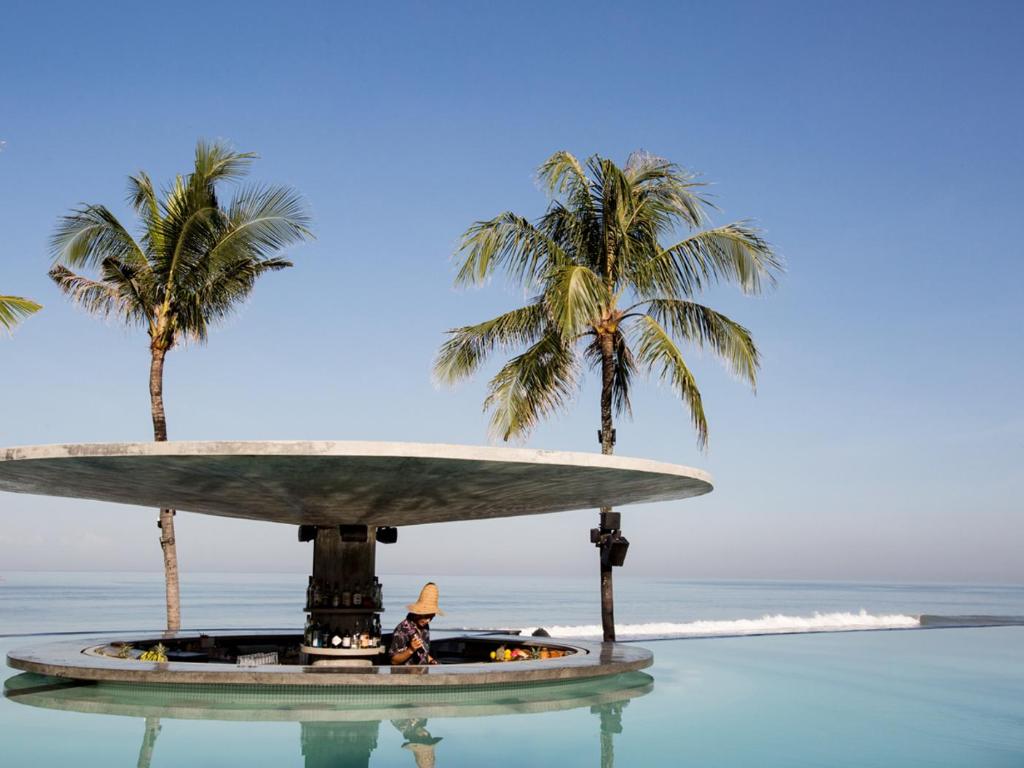
Oneeighty in Uluwatu is another example of the day-pass model, but at a much more premium level. Its official day pass page currently lists VIP admission at IDR 3,000,000 per bed for up to three people, with food and beverage credit included. Hanging Gardens of Bali, one of the island's most iconic jungle pool addresses, also promotes an official day pass, currently starting from IDR 350,000 for a day visit, with more packaged pool, lunch and spa options above that. Sakala Beach Club in Nusa Dua similarly advertises a day pass for its long oceanfront infinity pool.
The practical takeaway is simple: yes, non-guests can access some Bali pools, but this is more common at day clubs, beach clubs and selected resorts than at seclusion-first luxury hotels.
Advance booking is smart whenever the venue is social, sunset-driven or bed-based. Peak slots go first, especially when the pool doubles as a party venue. Savaya Bali is the clearest adult-only example. Its official FAQ states a strict 21-plus policy with valid ID required. It also enforces a smart casual dress code and does not allow beer-branded singlets, cut-off clothing or athletic sportswear.
Potato Head is looser. Its official beach club page says there is no dress code. FINNS in Canggu sits somewhere in between. Its official FAQ says there is no standard minimum spend for entry, but dress standards apply, and the venue enforces age restrictions for the club environment.
This matters more in Bali than in many destinations. Decide whether you want jungle depth, cliff horizon, beachfront ease or social beach-club energy. Once that is clear, the shortlist becomes much more logical.
Marketing language is loose. Ask whether the pool faces ocean, valley, garden or another structure. Recent wide-angle photos are more useful than hero shots.
Some of Bali's most photogenic water features belong to villas, suites or club-linked zones rather than the standard guest pool. Never assume.
Bali is warm year-round and humidity can make open decks feel more intense than the thermometer suggests. In dry season, late morning and late afternoon are usually the sweet spots. In wet season, take earlier pool time when possible.
On cliff and beachfront decks, exposure can be relentless. A hat, sunglasses and high-SPF sunscreen matter more than most travelers expect, especially when water reflection amplifies the sun.
At resort pools, Bali tends to be relaxed. At beach clubs, the code tightens a little. You may encounter age thresholds, ID checks, dress standards, no-outside-food rules, and bed reservations tied to food and beverage spend. Carry a payment card and expect cashless transactions to be common.
Many higher-end venues already add service charges and tax. Extra tipping for standout service is welcome, but it is not something to force. Check the bill before adding more.
Beachwear is fine at pool decks and beach clubs. It is not appropriate once you move into temples or more formal cultural settings. Bali is relaxed, but not context-free.
Choose Ubud for seclusion, texture and slower days, or Uluwatu for drama and sunset. If the trip matters, split both. Bali is one of the rare places where that contrast genuinely justifies changing hotels.
Villa-led resorts inland or on quieter cliff stretches win. Prioritize exact villa category, sightlines and whether the pool is heated if that matters to you.
Seminyak and Canggu make the most sense. Look for properties that either connect easily to the club scene or already have a social pool identity of their own.
Nusa Dua is often the easiest answer because service is polished, beaches are calmer, and resort layouts tend to be straightforward. Also check whether the property separates quieter adults-oriented water areas from family zones.
Uluwatu and the Bukit Peninsula usually deliver the biggest immediate wow factor. Ubud delivers the deeper mood. Which one wins depends on whether you want scale or atmosphere.
Seminyak, some Nusa Dua properties, and selected inland resorts can offer stronger perceived value than the most famous cliff addresses. But value in Bali is not just about room rate. It is also about how much of the pool experience is actually included once you factor in transfers, club spends and category upgrades.
Choose a hotel where the pool is strong enough that you do not need to chase a different scene every day. Bali rewards staying put more than over-scheduling.
 Frequently Asked Questions

 Get room prices